
A journey to the heart of the wild river
By Sandeep Chakrabarti
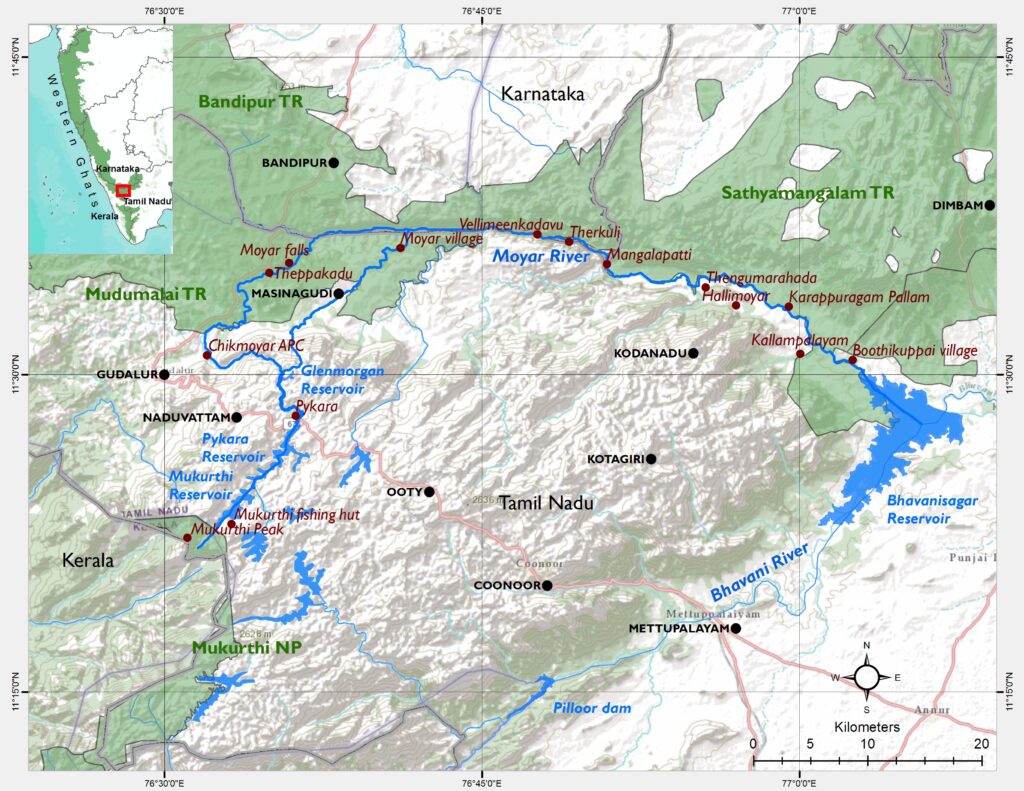
The search for the critically endangered orange fin/humpback mahseer (Tor remadevii) had just begun. WASI had planned a recce to the Moyar River in South India. Dr. A. J. T. Johnsingh was our lead scientist with the relevant contacts in the concerned government departments. On an earlier field visit he had camped at the Mangalapatti STF (special task force) camp and he cautioned us to be prepared for three days of field work in harsh and inhospitable terrain. He casually mentioned that the basics (without specifically mentioning the details) could be expected from the STF camp, but we would need to be fully equipped to take care of ourselves.
The WASI volunteer team of five was up to the challenge!!
Two 4WD SUVs loaded with tents, camping furniture, rations, ice boxes, fishing gear and 6 x 20 litre bottles of drinking water, drove out of Bangalore on to the Hosur Highway as the morning sun evaporated the mist on a bright March day.
Armed with a file full of documents and permissions securely tucked away in Suresh’s backpack and with Dr. Johnsingh leading us, the forest gates opened without a squeak and uniformed guards saluted smartly as our convoy drove across 20 kilometres (km) of a seldom-used forest road in the Sathyamangalam Tiger Reserve (STR).
We drove past Thengumarahada village to the STF camp guarded by Jawans casually holding lethal semi-automatic weapons in the crook of their arms. Business-like, they examined our documents and pointed us in the direction of three olive green tents pitched under shady trees at the far end of the campus, beyond which the Moyar gurgled past.
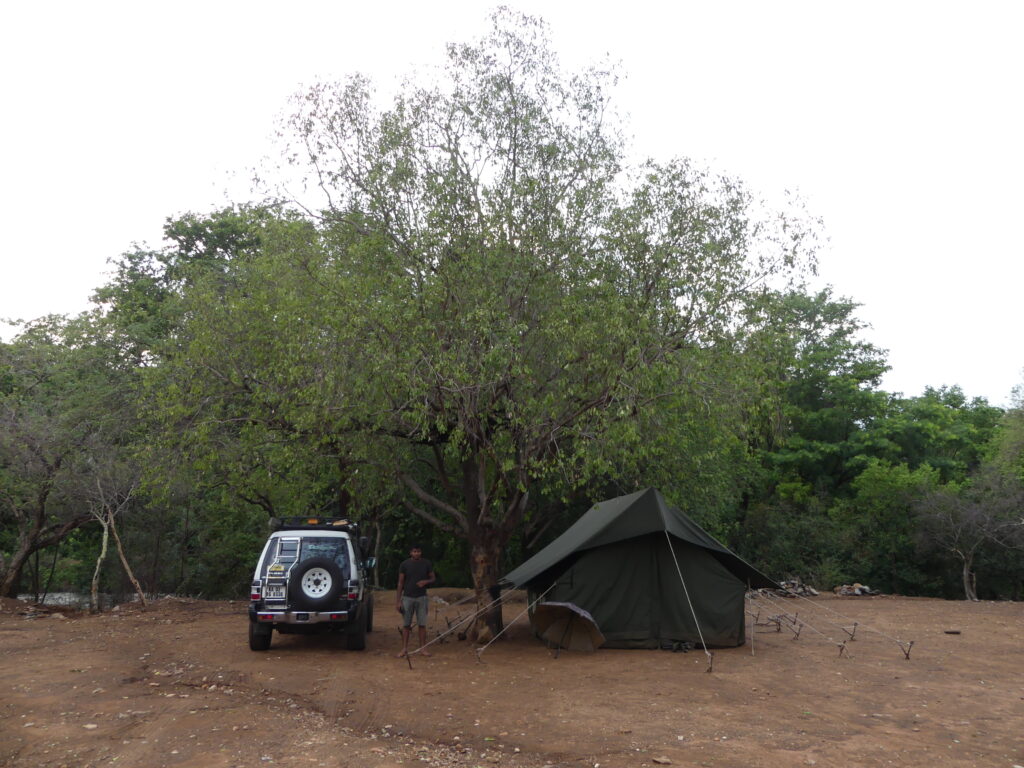
The WASI team had arrived at Mangalapatti. Our home and research field station for the next three days. Large tents, camping cots, tables and chairs and hot tea and snacks: we were floored! STF hospitality at its best, but least expected.
Unpacking and stowing away what we really required, we handed over the food supplies to the mess in charge and spent a social evening with the camp commandant. He shared his experiences of his long tenure with the STF. Hair-raising stuff, which had us mesmerised.
Next morning, Dr. Johnsingh was raring to go and look for the humpback mahseer (the underwater Tiger). Selvam (a fisherman from Thengumarahada) with his cast net arrived early hoping to grab a quick breakfast with us. The WASI recce team shouldered their somewhat bulky fishing gear and research paraphernalia and loaded their backpacks with two litres of drinking water. Displaying the enthusiasm of excited novices on their first research field visit, we decided to cross the Moyar.
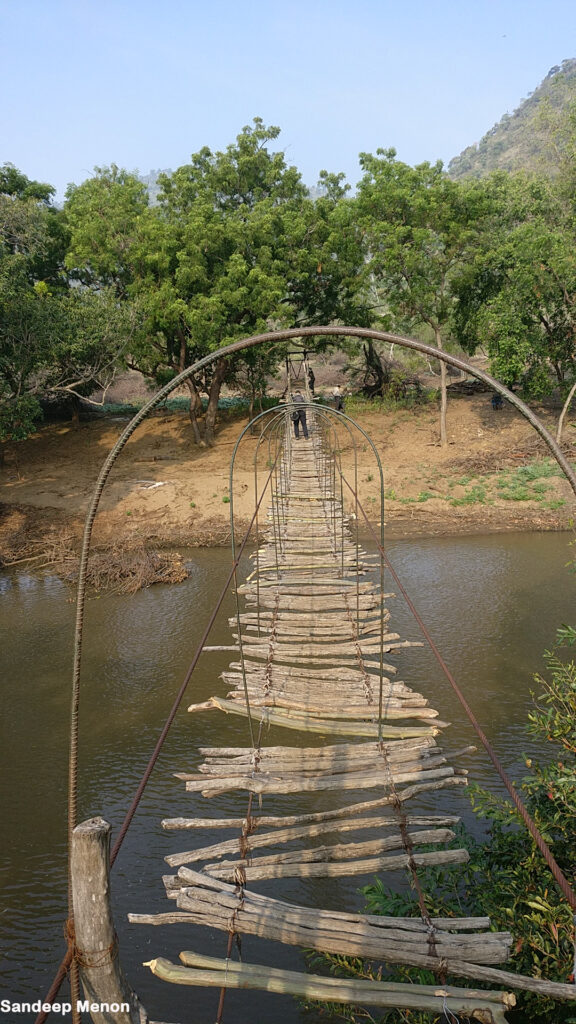
A rickety, cable-supported suspension bridge 25 feet above the Moyar, with hardly any wooden planks to step on, was the way across. I panicked! The fitter and younger team mates crossed ahead of me, as I gathered the courage to step on. How I managed to get across is a blurred memory. All I remember is Dr. Johnsingh sitting under a shady tree on the right bank of the Moyar, coolly photographing my fear and trepidation at crossing the suspension bridge. Selvam smiled at the city-bred conservationists / field researchers crossing the Moyar. Fear palpable, unsteady on their feet, perspiration dripping, while he casually folded his lungi and forded the river in chest-deep water.
Our task was clear. Capture the mahseer using rod and line, or the cast net, collect genetic and morphometric data, photograph the specimen and safely release it back into the river. And the task is done, the mission successful.
But an arduous trek in elephant and tiger country, in rising summer temperatures approaching 40 degrees Celsius and the fast depleting supply of drinking water left me lagging behind, while my fitter colleagues trudged upriver to the deep pools of Therkuzhi and Vellimeenkadavu. We relied on Selvam’s advice that our best chance of capturing the humpback mahseer would be in those deep pools.
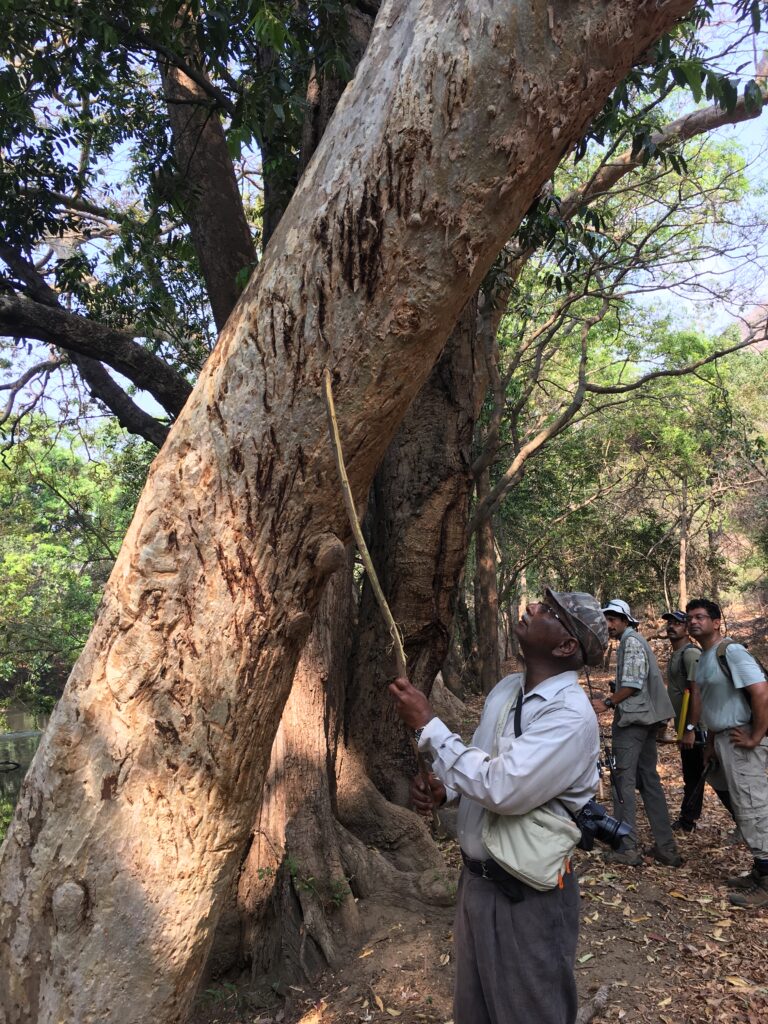
The trek was memorable from a wildlife experience. Pug marks, scat and the remains of kills were obvious to all, but the more subtle clues of wildlife activities required the field experience of Dr. Johnsingh to interpret for us, which he happily did.
Supported by the STF commandant and his semi-automatic weapon-toting jawans, we were supplied with rasam rice and curd for lunch, simple but so appropriate for the sweltering afternoon. How thoughtful of them. Gastronomic Heaven on the banks of the Moyar, deep inside the Tiger Reserve.
The stalwarts of the WASI recce team returned to the STF camp in the lengthening shadows of a forest preparing for nightfall. We had successfully captured the humpback mahseer and collected the scientific data and samples.
Mission accomplished, we exchanged tales of an unforgettable day over several cups of tea and hot snacks, courtesy the STF mess cook.
One by one, seduced by the gurgling Moyar, we dipped our weary bodies in the cooling water. Sore feet and aching muscles soon relaxed and we stepped out of the river rejuvenated. Ravenous after the long trek, dinner was devoured with great relish.
Camp cots were pulled out of the stifling warm tents, to sleep under a canopy of stars. A gentle, cool breeze, the distant sounds of alarm calls and the fragrance of the forest had us drift off to blissful sleep.
What an adventure! But there was more to come.
Tryst with the big cats:
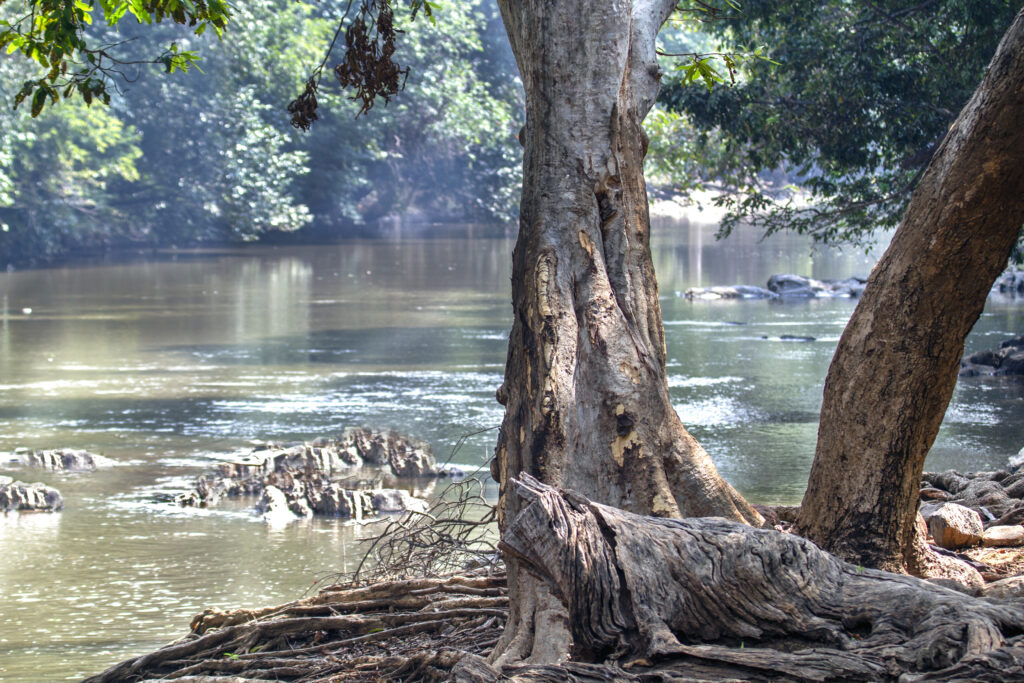
The narrow Moyar Valley in summer is dry and parched, the surrounding hills brown and the trees leafless. Heat reflects off the rocky terrain to sap the last drop of moisture from every living thing. Inhospitable, harsh and demanding terrain for any researcher or wildlife enthusiast. Yet life is abundant, as we had discovered on the treks of the previous days. Moyar, a ribbon of clear water reflecting the colours of the sky, flows through this landscape. Sustenance for all the denizens of the surrounding forest. Bandipur, Mudumalai and the Sathyamangalam Tiger Reserve.
Little did we know that the Moyar valley had saved its biggest surprise for our last day.
Dr. Johnsingh suggested an early start for our trek to avoid the heat, yet enjoy the experience of a walk where few people have stepped before. No trash along the trail, no floating plastic or polystyrene in the river.
Suresh, Kart and I started early knowing that Dr. Johnsingh and Selvam would catch up soon. The trail was along the left bank of the Moyar, on the same side as our camp, and required no suspension bridge trapeze act as in our earlier river crossings.
In 15 minutes of walking from the camp we reached a ‘nallah,’ a rock-strewn shallow channel which is the passage for rain water to flow to the river from the surrounding hills in the monsoon. Dry in summer except for the mossy pools harbouring minuscule life like tadpoles and larvae, the nallah led to the river not more than 30 feet away.
This nallah would be the stage for a once-in-a-lifetime experience.
Suresh, Kart and I crossed the nallah without a problem and headed upriver, looking for pools which could possibly provide refuge and food for the mahseer. The water in the river was low, the flow controlled by the dams upstream. Mahseer would necessarily be found in deep pools, and that is what we were looking for.
Within about 10 minutes of walking upriver we heard alarm calls from the hills on our right. Excited and anticipating that a big cat could be on the move we froze. Kart dressed in camo and sporting a digital camera with a 400 mm zoom lens decided to retrace his steps to the nallah. Suresh, equally excited, followed Kart, armed with a machete.
Dr. Johnsingh too heard the alarm calls before he crossed the nallah. Signalling to Selvam to be quiet and motionless they took cover behind a large tree with a clear view of the nallah and the Moyar. He anticipated that the feline was walking down to the nallah for a drink. The river and the path of the cat were tantalisingly close.
On the other side of the nallah Kart and Suresh found no cover. The alarm calls were getting louder and more frequent. Their only choice was to crouch behind some boulders, keep a low profile and remain absolutely still.
Unhurried but surely thirsty, the tiger appeared, walking down the boulder-strewn nallah in the direction of the Moyar.
The two photographers on either side of the nallah waited; hearts pounding. The tiger had not noticed either of them and was walking in the direction of the river. A photographer’s dream come true, as it got closer and closer.
Dr. Johnsingh wanted to see the tiger walk to the river and observe its behaviour before taking any pictures. He was well hidden behind the tree and in no hurry. But Kart being young and impetuous and without suitable natural cover could not resist the temptation of squeezing off a few frames of a tiger sighting on foot.
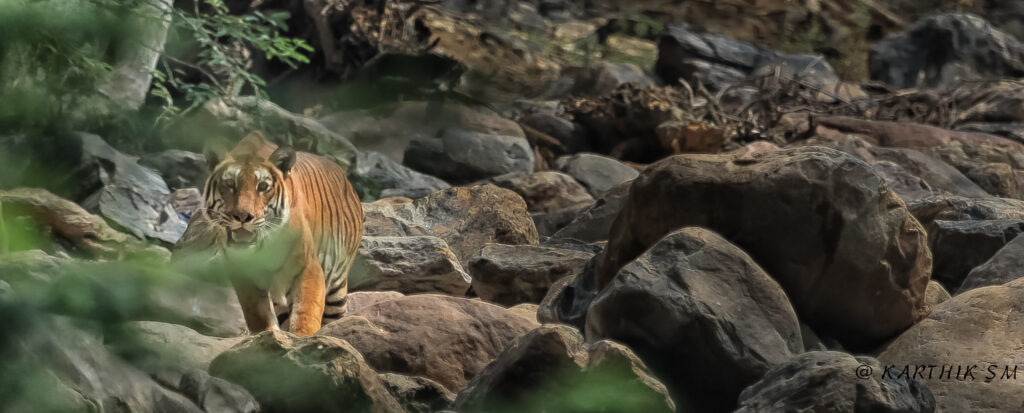
In slow motion Kart raised his camera. The motor of the 400 mm lens whirred softly to lock the focus, the tiger looked up, and for a millisecond the photographer and his subject were making eye contact. The shutter clicked on high speed motor drive. In just two frames the tiger melted back into the forest.
Team WASI was delighted to have encountered Tor remadevii and Panthera tigris, both tigers in their own realms.
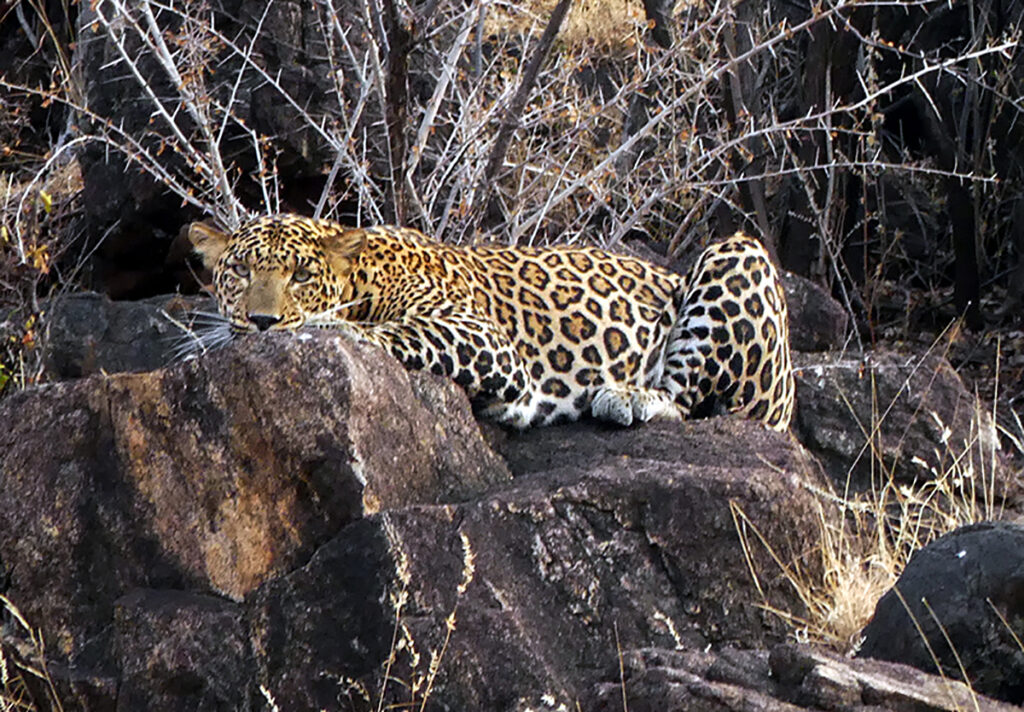
As we drove out the following morning, we saw a leopard sunbathing on a rock and managed to capture some images too. Further down the forest road, blackbuck and herds of spotted deer, feeding in the cool of the early morning raised their heads to see the SUV drive by. A landscape blessed with abundant wildlife. An unforgettable experience.
Beyond the STR forest gate the tyres of the SUV bit the tarmac, the engine revved and the wildlife paradise receded in the wing mirrors. We were heading back to another jungle.
Bangalore!
– Text and story by Sandeep Chakrabarti